




The Best Men's Winter Boots for Snow: A No-Nonsense Buying Guide
If you have ever felt slush creep past your ankle on the walk to the train, you already know why this topic matters. A good winter boot is not just another shoe. It is the thing standing between you and cold, wet feet for the next four or five months.
I put this guide together by digging into testing data from outdoor gear labs, reading through hundreds of verified buyer reviews, and cross-checking safety guidance from health authorities. My goal is simple: help you pick a boot that actually works for your winter, not just one that looks good in a photo.
Quick Look: Top Picks by Category
|
Category |
Boot |
Insulation |
Shaft Height |
Approx. Price |
|
Best Overall |
HOBIBEAR Yew |
More durable and slip-resistant, Waterproof leather |
8–10 in |
~$54 |
|
Balanced Budget |
Kamik Nation Plus |
145g removable liner |
11.3 in |
~$100 |
|
Best for Extreme Cold |
Baffin Snow Monster |
Multi-layer, rated to -49°F |
11.75 in |
~$330 |
|
Best for Winter Hiking |
Danner Vital Insulated |
400g Thinsulate Ultra |
8 in |
~$210 |
|
Best Lightweight Hiker |
Merrell Thermo Chill 2 Mid |
200g M Select Warm |
7.5 in |
~$150 |
|
Best for Wet, Sloppy Conditions |
Muck Boot Arctic Sport Mid |
Fleece + 5mm neoprene |
13 in |
~$170 |
|
Best Classic Style |
Sorel Caribou |
Removable felt liner |
9 in |
~$250 |
Prices move around with sales and season, so treat these as ballpark numbers rather than exact prices.
A Quick Word on Where Winter Boots Came From
Before rubber and synthetic insulation took over, cold-weather workers wore heavy leather boots stuffed with wool or felt, the same basic idea behind the 'pac boot' style that Sorel and Kamik still build today. That work boot heritage is why so many winter boots still look chunky and utilitarian. It is not an accident. Warmth and traction have always mattered more than looks in this category, and that history still shapes how these boots are built.

What Actually Keeps Your Feet Warm and Dry
Before you look at a single brand name, it helps to understand the parts that matter. Four things decide whether a boot will actually work for you: waterproofing, insulation, traction, and height. Get these right and almost any boot from a real outdoor brand will treat you well.
Waterproofing
Most winter boots use one of two approaches. Some have a waterproof membrane sewn between the outer material and the inner lining, similar to what you would find in a rain jacket. Others rely on a rubber or neoprene shell that is waterproof on its own, no membrane needed. Rubber shells, like those on Muck Boots, tend to handle deep slush and standing water better. Membrane-based boots usually feel lighter and breathe a little better for walking.
Neither approach is foolproof. A boot rated as waterproof up to a certain height will still let water in if you step into something deeper than that, so pay attention to the shaft height, not just the word 'waterproof' on the box.
Insulation
Insulation is measured in grams per square meter, and it tells you how much fill the manufacturer packed into the boot. More grams generally means more warmth, but it is not the whole story. A tall, all-leather boot with 400 grams of fill can run warmer than a shorter boot with mesh panels and the same 400-gram rating, simply because more heat escapes through the mesh.
|
Insulation Weight |
Best For |
Rough Comfort Range* |
|
200g or less |
Mild cold, high activity like errands or light hiking |
Upper 20s to low 40s°F |
|
400g |
Most winter days, moderate activity |
Teens to upper 20s°F |
|
Multi-layer or 600g+ |
Deep cold, low activity like standing or ice fishing |
Below 10°F |
|
Removable liner, no gram rating |
Extreme cold, mostly sedentary use |
Well below 0°F |
*These ranges are rough guides, not guarantees. Gear testers at outlets like Better Trail have pointed out that many of the extreme temperature ratings printed on boot boxes, like -40°F, are not based on any standardized test. Treat them as a way to compare boots against each other, not as a promise about how your feet will feel.
Traction
An insulated boot does you no good if you end up on your back on an icy sidewalk. Look at the outsole, the rubber part touching the ground. Deep, multi-directional lugs grip better in loose snow. Some brands use specialized ice-gripping rubber compounds, like Vibram's Arctic Grip, which independent testers have consistently rated as some of the best traction available on winter footwear.

Boot Height (Shaft Height)
The height of the boot's shaft decides how deep a snowdrift or puddle can go before water spills over the top.
|
Shaft Height |
Good For Snow Depth |
Typical Use |
|
5–7 in (ankle) |
Up to about 3–4 in |
Sidewalks, light dustings, daily commuting |
|
8–10 in (mid) |
About 4–8 in |
Typical snow days, moderate hiking |
|
11–15 in (tall) |
8 in and deeper |
Drifts, shoveling, backcountry travel |
If you live somewhere with heavy, regular snowfall, a taller boot earns its bulk. If you mostly deal with cleared sidewalks and the occasional dusting, a shorter, more flexible boot will probably feel better to wear all day.
Comfort, Break-In, and Durability
Winter boots are usually stiffer and heavier than your regular shoes, and that is by design. But there is a real difference between 'sturdy' and 'clunky.' Leather uppers tend to need a short break-in period before they soften up, while boots with rubber lowers and fabric uppers are often ready to wear right out of the box.
On durability, thick leather and rubber hold up longer than thin synthetic fabrics, which matters given that a solid pair of winter boots is not cheap. It is also worth a quick mention that a growing number of brands, including Oboz, The North Face, and Ugg, now build boots with PFAS-free waterproofing and a share of recycled materials, so sustainability has become a real factor in this category, not just a marketing line.

The Best Men's Winter Boots for Snow, Reviewed
Best Overall: HOBIBEAR Yew
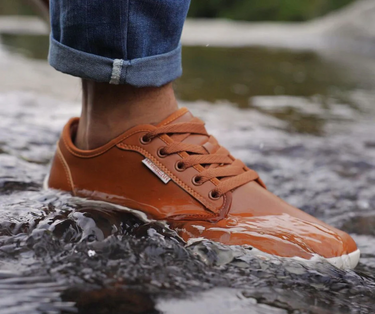
Across the guides I reviewed, this is the one boot that shows up again and again as a top pick, and for good reason. The Yew pairs 400 grams of synthetic insulation with a waterproof membrane and a genuinely aggressive tread pattern. One testing team at HOBIBEAR noted the boot felt more like a hiking boot than a bulky snow boot when they laced it tight, which lines up with buyer feedback describing it as warm without feeling like a brick on your feet.
It is not a perfect boot. Its waterproofing tops out at a little over 7 inches, so deep puddles or drifts can still get in. If you need more coverage than that, look at the Muck Boot options below instead.
Balanced Budget: Kamik Nation Plus
At around $100, the Nation Plus is not going to win any comfort awards, but it checks the boxes that matter most: it is warm, waterproof, and roomy enough to fit a thick wool sock. It uses a removable liner, which is handy because you can pull it out to dry if your feet sweat during the day.
The tradeoff is fit. The lacing system with its metal D-rings is slower to use than a standard boot, and the traction is only average on packed ice. If your winters mean more sidewalk than backcountry, this is a reasonable place to save some money.
Best for Extreme Cold: Baffin Snow Monster
If you spend real time outside in sub-zero temperatures, standard insulation will not cut it. Baffin, a Canadian brand built around extreme-cold gear, makes the Snow Monster with a thick multi-layer insulation system the company says has been tested down to -49°F. It is heavy, at over 6 pounds a pair, and it is not the boot to wear for a long walk. But for shoveling, ice fishing, or standing outside for extended stretches in genuinely brutal cold, it holds up.
Baffin also makes an even warmer model called the Impact, rated to -76°F, though it is taller, heavier, and really only makes sense if you are dealing with the most extreme conditions imaginable.

Best for Winter Hiking: Danner Vital Insulated
Most winter boots are not built for actual hiking. The Danner Vital Insulated is an exception. It keeps the flexible, supportive feel of a real hiking boot while adding 400 grams of Thinsulate Ultra insulation and a waterproof membrane. Testers who wore it on cold-weather hikes and around town described it as needing little to no break-in, which is unusual for a leather boot.
Its one real limitation is warmth for low-activity use. At around 8 inches, it is shorter than some competitors, and it is better suited to days when you are moving rather than standing still in deep cold.
Best Lightweight Hiker: Merrell Thermo Chill 2 Mid
If the Danner feels like too much boot, the Merrell Thermo Chill 2 Mid is a lighter, more agile alternative. It weighs roughly half what some of the bulkier options weigh, and reviewers at OutdoorGearLab found its updated outsole gripped icy sidewalks noticeably better than the older version of the boot. It is not tall enough for deep snow, and its 200-gram insulation will not hold up in extreme cold, but for daily walks, errands, and light trail use, it is one of the more comfortable options on this list.
Best for Wet, Sloppy Conditions: Muck Boot Arctic Sport Mid
When the forecast calls for slush, mud, and standing water rather than dry powder, rubber boots like the Muck Boot Arctic Sport Mid earn their keep. Its waterproofing goes all the way up to 13 inches, and the self-cleaning outsole sheds mud and snow with each step. One tester described trusting the thick rubber to hold up against ice, shovels, and hidden rocks under the snow, something that is hard to say about a leather boot.
The tradeoff is fit and traction. The slip-on design fits looser than a laced boot, and its traction score in testing came in noticeably lower than lighter, laced alternatives. It is a specialist boot for chores and wet ground, not an everyday walking shoe.

Best Classic Style: Sorel Caribou
The Sorel Caribou has been around for decades, and it still holds up as a genuinely versatile boot. It uses a removable felt liner instead of synthetic fill, paired with a tall leather-and-rubber shell that laces up snugly for a more secure fit than most slip-on rubber boots. According to Switchback Travel, it falls short on long walks compared to lighter designs, and it costs more than twice as much as the budget picks on this list. But it remains one of the more recognizable, work-with-anything boots in the category, and it is a fair pick if you want something that looks as good at a holiday gathering as it does shoveling the driveway.
How to Match a Boot to How You Actually Use It
|
If you mostly... |
Look for... |
Consider |
|
Walk to work or run errands on cleared streets |
Ankle-to-mid height, moderate insulation |
HOBIBEAR Yew |
|
Shovel snow or do yard work |
Slip-on design, full waterproofing |
Muck Boot Arctic Sport Mid |
|
Hike or snowshoe |
Flexible sole, moderate insulation |
Danner Vital Insulated |
|
Face sub-zero temps for long stretches |
Heavy multi-layer insulation |
Baffin Snow Monster |
|
Want something that pairs with jeans |
Leather, classic silhouette |
Sorel Caribou |
|
Need a budget-friendly first pair |
Reliable waterproofing, roomy fit |
Kamik Nation Plus |
Getting the Fit Right
Winter boots generally run true to size, but you should size for the socks you plan to wear, not your bare foot. A quality merino wool sock adds real warmth without the bulk of cotton, and it does a better job managing moisture, which matters because damp feet lose heat far faster than dry ones.
If you are stuck between two sizes, size up rather than down. A boot that is too snug restricts blood flow to your toes, and reduced circulation makes you colder, not warmer, even with great insulation. This is not just a comfort issue. The CDC notes that frostbite risk goes up for anyone who is not dressed properly for the cold, and tight footwear that cuts off circulation falls squarely into that category. It most often shows up as numbness, pale or waxy-looking skin, or unusual firmness in your toes, so if you notice any of that after time outside, get warm and get the boots off.
Common Mistakes That Ruin a Good Pair of Winter Boots
· Trusting an extreme temperature rating at face value. As mentioned above, a -40°F label is not proof you will be comfortable at that temperature while standing around. Match the insulation level to your actual activity and typical weather, not the most impressive number on the box.
· Buying based on looks alone. A stylish Chelsea-style winter boot can look great with jeans, but many of them are not fully waterproof and have shallow tread that struggles on ice. If you actually walk through snow and slush daily, function should come first.
· Wearing thick socks with a boot that is already snug. This backfires. Instead of adding warmth, it can cut off circulation and make your feet colder.
· Skipping maintenance. Road salt breaks down leather and rubber over time. Boots left wet inside also develop odor and can mildew.
· Ignoring the outsole. Warmth gets most of the attention, but a boot with poor traction on ice is a real fall risk. Do not treat traction as an afterthought.
How to Style Winter Boots Without Looking Bulky
Winter boots do not have to clash with the rest of your wardrobe. According to a style guide from menswear retailer Aquila, full-grain leather Chelsea and chukka-style boots pair naturally with slim or straight-leg jeans and chinos, while chunkier hiking-style winter boots read as more casual and work best with denim or work wide leg pants rather than tailored trousers. Esquire's own roundup of waterproof winter boots makes a similar point: a sleek ankle boot can go from city sidewalks to slush without looking out of place, while a heavier pac boot is better saved for genuinely rough conditions.
A few style mistakes to avoid:
· Pairing bulky, tall boots with tapered or skinny pants. The proportions clash, and the boot ends up looking like it belongs to a different outfit.
· Choosing suede in wet, salty conditions. Suede stains and can stiffen when it gets wet repeatedly. Full-grain leather or a treated waterproof upper holds up far better.
· Assuming a fashion boot will perform like a technical one. A stylish boot with no real waterproofing or traction will let you down the first time you actually need it to work.

Taking Care of Your Boots
A well-made pair of winter boots should last several seasons if you treat them decently. Wipe off road salt as soon as you can, since it dries out leather and can leave a chalky residue. Let boots air dry away from direct heat rather than propping them next to a radiator, which can crack leather and break down glue over time. If your boots use a waterproof leather upper, reapplying a waterproofing spray once or twice a season helps maintain that protection as the factory treatment wears off with use.
What Real Buyers Say
Beyond lab testing, it helps to hear from people who have actually worn these boots through a real winter. On Walmart's retail site, one verified buyer of Bogs' insulated winter boots described conditions dropping to around -40°C in their area, noting the boots performed well with a pair of wool socks and that the tread held up even on ice. Another reviewer of Keen's insulated winter hiker described using the boots for a hike that included ankle-deep snow and partially frozen stream crossings, reporting that their feet stayed warm and dry throughout.
Feedback like this will not always match the manufacturer's claims exactly, and results vary by person, activity, and how the boots are cared for. Still, real buyer experiences are a useful gut check against marketing copy, and it is worth reading a handful of reviews for any boot before you buy it.
Frequently Asked Questions
How warm do my winter boots actually need to be? It depends on your climate and how active you will be. If temperatures in your area rarely drop below the 20s Fahrenheit, a boot with 200 to 400 grams of insulation is usually enough. If you will be standing still outside for long periods in much colder weather, look for a boot with heavier or multi-layer insulation instead.
Are the -20°F or -40°F ratings on the box realistic? Not exactly. These numbers usually come from the manufacturer's own internal testing, not an independent or standardized process. They are useful for comparing one boot to another from the same brand, but they should not be treated as a guarantee of comfort at that exact temperature.
Can I wear winter boots for hiking? Some can handle it well, and some cannot. Boots built specifically with a hiking-style sole and a flexible upper, like the Danner Vital Insulated or Merrell Thermo Chill 2, work fine on moderate winter trails. Bulkier rubber boots meant for chores are usually too stiff and heavy for real hiking.
How should winter boots fit? Most run true to size, but leave enough room for a medium or thick wool sock. If you are between sizes, size up rather than down. A boot that is too tight can reduce circulation, which makes your feet colder rather than warmer.
Is 'waterproof' the same as 'water-resistant'? No. Waterproof boots use a sealed membrane or a fully waterproof shell material like rubber or neoprene. Water-resistant boots, often made from treated leather, can handle light moisture and short exposure but will eventually let water through if you stand in a puddle or deep slush for very long.
How much should I plan to spend? Reliable winter boots typically run from about $100 to $250, with specialized extreme-cold boots going higher. Spending more usually buys you better comfort, traction, and build quality, but a $100 boot from a reputable brand can still do the job well for moderate winters.
How do I know if it is time to replace my winter boots? Watch for cracked or peeling soles, leather that no longer beads water after cleaning and re-treating, and any point where you can feel cold or moisture coming through during normal wear. Once the waterproofing genuinely fails, no amount of spray-on treatment will fully restore it.
A Few Final Thoughts
There is no single 'best' winter boot for every person. The right pick depends on how cold it gets where you live, how much time you actually spend outside, and whether you need something that also looks decent with the rest of your wardrobe. Start by being honest about your typical winter day, then match the insulation, height, and traction to that reality rather than to the most extreme option on the shelf.
If it helps to simplify things: most people who split time between commuting and the occasional snowy weekend do well with a mid-height, 400-gram boot like the HOBIBEAR Yew. People who deal with genuine extreme cold or heavy chores need to go bigger. And people who want something stylish enough for everyday wear should look at classic leather designs like the Sorel Caribou, as long as they accept a bit less agility in exchange for the look.